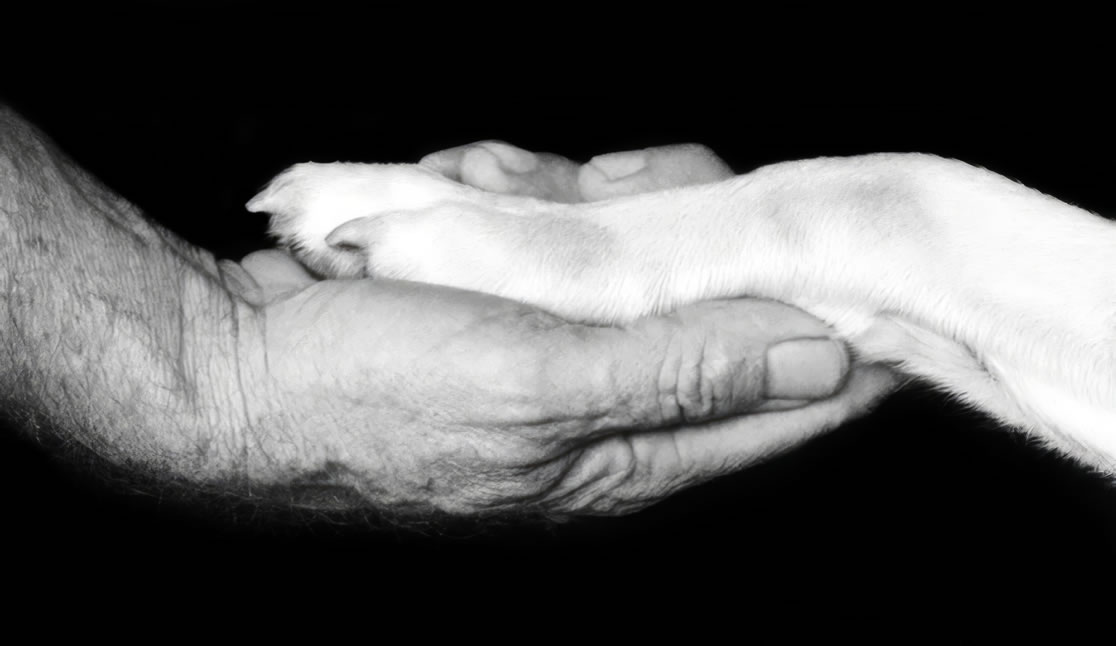
In conclusion
In contemplating the intricate dynamics between humans and animals, particularly in the context of disability, 'we as trans-species' advocate for a paradigm shift. We underscore the need to perceive nonhuman animals not merely as tools for human convenience but as sentient beings with unique subjectivities. This end point sets the stage for an exploration of trans-species relationships, the limitations of binary labels, recognition of unique subjectivities, and the implications for social inclusion. These topics are further elucidated in the subsequent ‘detailed notes’ discussions throughout my artwork.
medium
Digital photograph
Image details
Digital C-Type print, flush-mounted on 3mm Alupanel
Dimensions
200 x 335 x 3 mm
“…instead of seeing the nonhuman animal as merely a prop or tool for allowing the disabled to be mainstreamed into liberal society and its values, wouldn’t we do better to imagine this example as an irreducibly different and unique form of subjectivity – neither homo sapien nor canis familiaris, neither “disabled” nor “normal,” but something else altogether, a shared trans-species-being-in-the-world constituted by complex relations of trust, respect, dependence, and communication (as anyone who has ever trained-or relied on a service dog would be the first to tell you)?” Carey Wolfe (2009, 141)
Critical context
1. Reimagining the Relationship Between Humans and Animals: ‘In conclusion’ challenges us to reconsider our perception of nonhuman animals, particularly in the context of disability. It suggests that rather than viewing animals as mere tools for human convenience, we should recognize their inherent subjectivity and unique contributions to shared experiences.
2. Trans-Species Relationships: The concept of a “shared trans-species-being-in-the-world” invites discussions about the nature of relationships between different species. It prompts exploration into the dynamics of trust, respect, dependence, and communication that can exist between humans and animals, particularly PTSD assistance animals.
3. Beyond Binary Labels: By questioning the binary categorizations of “disabled” and “normal,” this concept urges us to move beyond simplistic labels and acknowledge the complexity of individual experiences. This opens up conversations about the limitations of traditional classifications and the need for more nuanced understandings of diversity and difference.
4. Recognition of Unique Subjectivities: The artwork emphasizes the importance of recognizing and respecting the unique subjectivity of nonhuman animals. This could lead to discussions about the ethics of human-animal interactions, including considerations of autonomy, agency, and consent.
5. Implications for Social Inclusion: Finally, the images materiality and performative aspects raises broader questions about social inclusion and the role of animals in facilitating it. It challenges us to rethink mainstream notions of inclusion and diversity by acknowledging the contributions of animals in fostering meaningful connections and enriching human experiences.