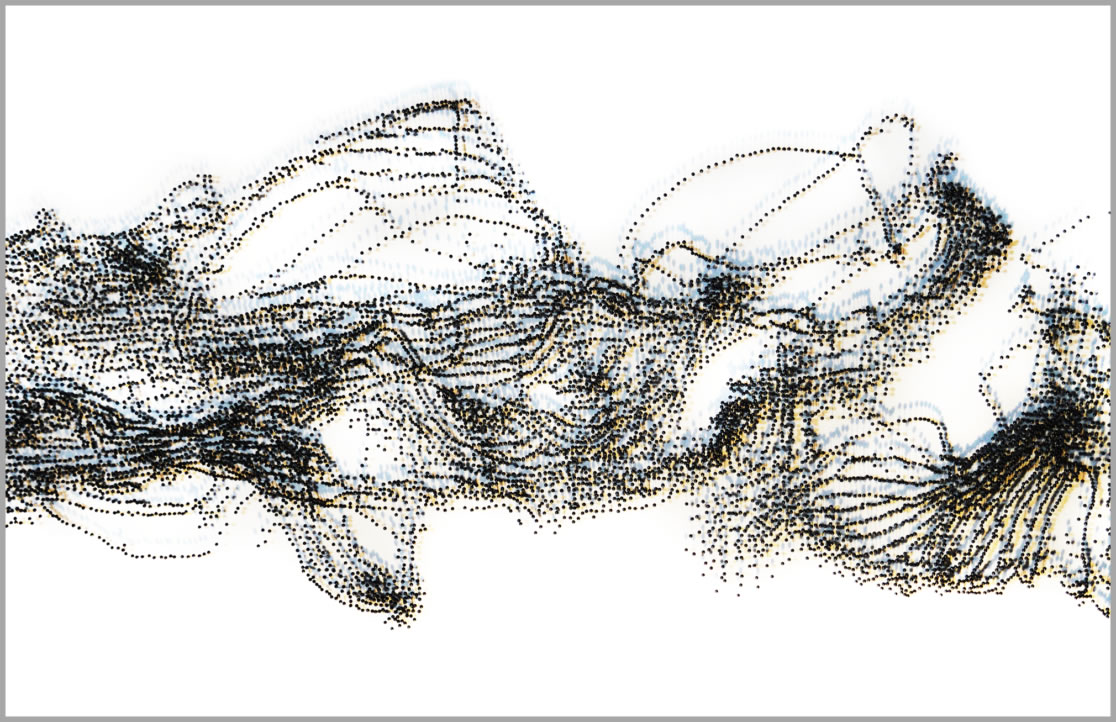
Trans-species lines made by walking
Trans-species lines made by walking, 2023′, captures 12 months of inseparable PTSD canine and human walking data, symbolizing collaborative time/space movements specific to a disability performance. From our lived perspective it embodies the inseparable journey through social spaces, facilitated by Ruby’s canine/feminist modes of care.
Data type
PTSD disability canine and human GPS data
Medium
Geo pins on board
Dimensions
150 x 225 x 3 mm
Critical context
“…instead of seeing the nonhuman animal as merely a prop or tool for allowing the disabled to be mainstreamed into liberal society and its values, wouldn’t we do better to imagine this example as an irreducibly different and unique form of subjectivity – neither homo sapien nor canis familiaris, neither “disabled” nor “normal,” but something else altogether, a shared trans-species-being-in-the-world constituted by complex relations of trust, respect, dependence, and communication (as anyone who has ever trained-or relied on a service dog would be the first to tell you)?” Carey Wolfe (2009, 141)Inspired by Richard Long’s solitary performative works, this collaborative sculpture and data visualisation celebrates the symbiotic relationship between human and canine, reflecting a contemporary shift towards inclusive post-human relationships. Through the convergence of GPS walking data, it highlights the transformative power of companionship in navigating shared experiences and the re-engagement with public spaces. By embracing the intersecting realms of disability, feminism, and animal studies, the data socially challenges conventional notions of autonomy and agency, inviting viewers to explore the dynamic interplay of a posthuman collaborative relationships occurring right now in the 21st century.
Notes summarizing further avenues for investigation:
1. Investigate the implications of collaborative time/space movements specific to disability performance as symbolized by the “Trans-species lines made by walking, 2023” sculpture and data visualization.
2. Explore the lived experiences and perspectives of individuals with disabilities and their PTSD assistance dogs in navigating social spaces, particularly focusing on the facilitation canine/feminist modes of care.
3. Analyze the parallels and divergences between collaborative art practices like this sculpture and the solitary performative works of artists like Richard Long, examining how they reflect shifts towards inclusive post-human relationships.
4. Examine the transformative power of companionship in navigating shared experiences and re-engagement with public spaces, as depicted by the convergence of GPS walking data in the artwork.
5. Critically assess how this artwork challenges conventional notions of autonomy and agency, particularly within the intersecting realms of disability, feminism, and animal studies.
6. Investigate the potential for similar collaborative art projects to serve as platforms for social critique and exploration of post-human collaborative relationships in the 21st century.
7. Explore the role of technology, such as GPS tracking and data visualization, in representing and understanding the dynamics of human-canine relationships and disability experiences.
8. Consider the broader societal implications of post-human collaborative relationships depicted in the artwork, including their impact on notions of identity, community, and belonging.