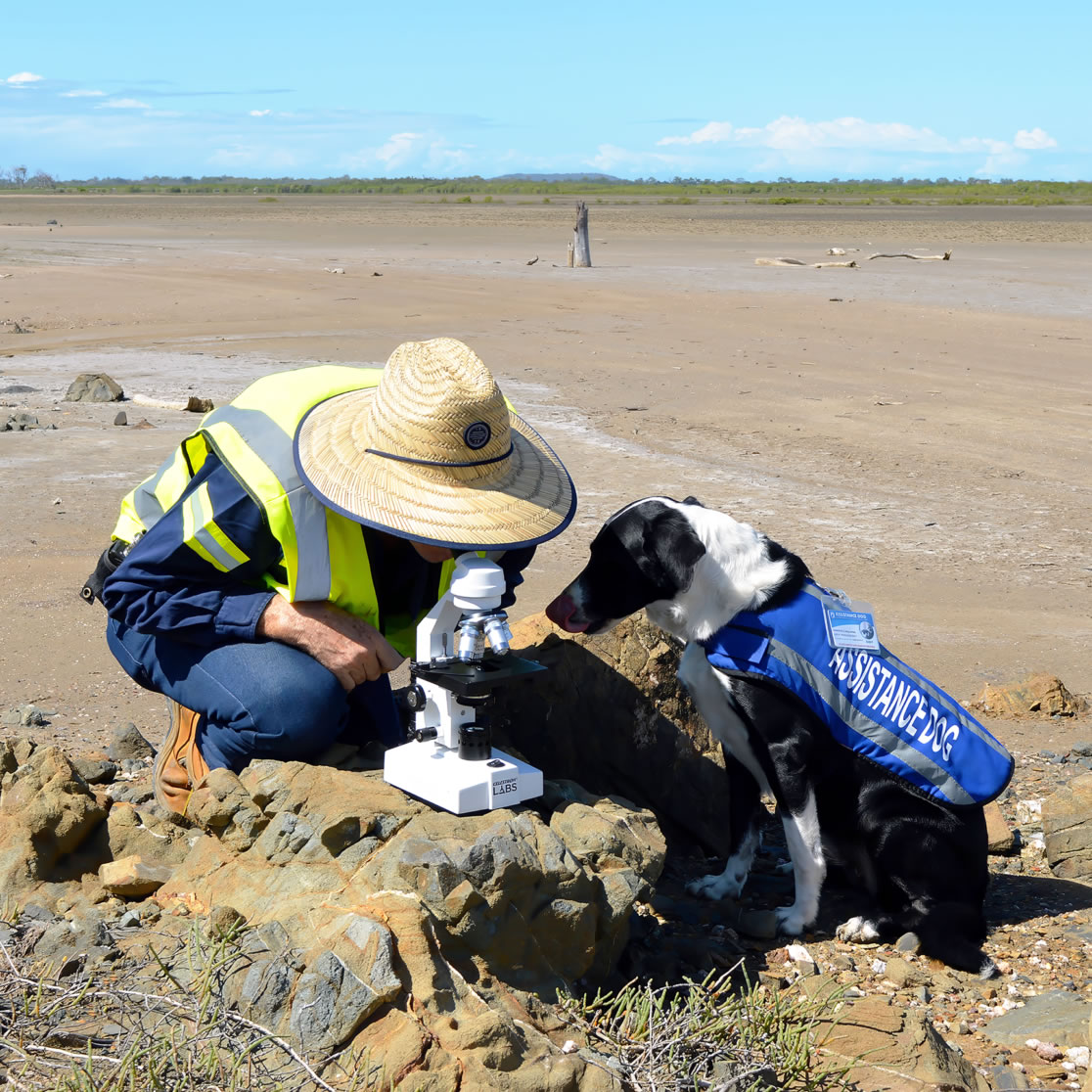
Borderland Biology
Borderland Biology involves embracing radical teaching and learning methods, collaborating with the animal to collectively reconsider the assumptions that shape how humans construct meaning. This process extends to reevaluating how we learn to relate to each other and the broader, more-than-human world. The subsequent step entails engaging in critical and ethical reconceptualizations and reimagining’s (Nocella, Amber & Schalz, 2017, 63-76).
Medium
Digital photograph
Image type
Digital C-Type print, flush-mounted on 3mm Alupanel
Dimensions
150 x 150 x 3 mm
Critical context
Siebers (2010) proposes “disability aesthetics” as a critical framework for appreciating the aesthetic value in art that incorporates representations of disability. This framework suggests that art can disrupt traditional aesthetic judgments by presenting bodies and abilities that deviate from normative standards. Instead of viewing these deviations as deficiencies, disability aesthetics values them as integral to the artwork’s expressive power and meaning.
Citations:
Nocella, Anthony J., Amber E. George, and J. L. Schatz. 2017. The intersectionality of critical animal, disability, and environmental studies: toward eco-ability, justice, and liberation. Rowman & Littlefield. US.
Siebers, T. 2008. Disability Theory. Ann Arbor, MI: University of Michigan Press.